


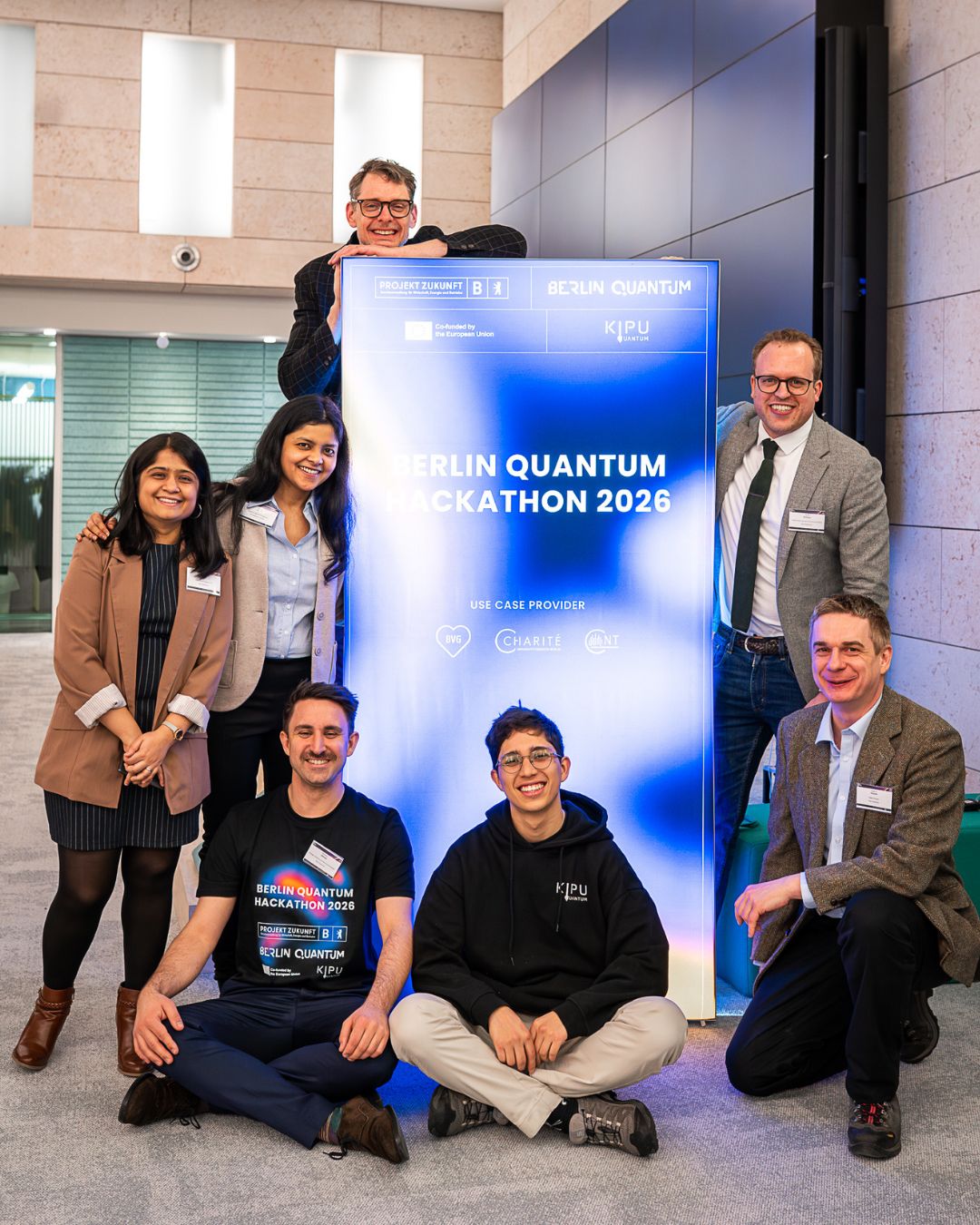
Berlin Quantum Hackathon 2026
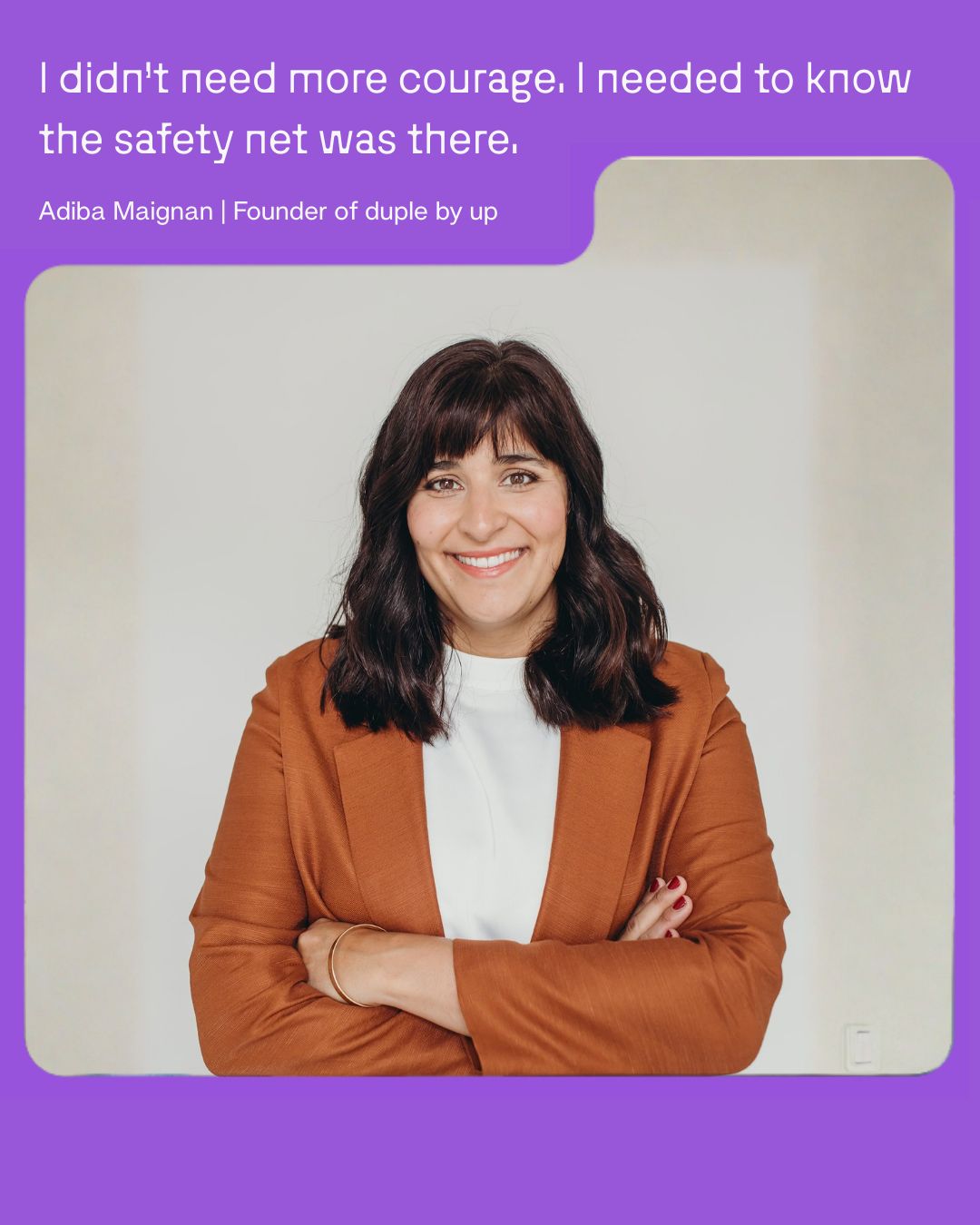
Gründerin Adiba Maignan
Weekly Wrap-up: Highlights in week 10
Gender Gap persists in the German Startup Scene
On International Women’s Day, celebrated annually on March 8th, FLINTA individuals once again took to the streets worldwide to fight for women’s rights and gender justice. On this occasion, Science & Startups published figures that serve as a reminder that equality and equal opportunity are still not a reality in the startup world.
In Germany, only 19.8 percent of startup founders are women. In general, women are less likely to envision themselves as founders: in a student survey, 40 percent of men stated they could see themselves as founders in the future, compared to only 21 percent of their female peers. Founders Dr. Adiba Maignan and Stine Hecht, who spoke with Science & Startups for Women’s Day, noted that scholarships and institutional support were crucial factors in their decision to launch their businesses. Furthermore, research shows that role models and the compatibility of work and family life are essential to closing the gender gap in the startup industry.
First Berlin Quantum Hackathon 2026
The performance of quantum computers exceeds that of classical models many times over. Quantum computing is considered a key technology of the future, as it allows highly complex challenges in business, mobility, energy, and medicine to be addressed in fundamentally new ways. The potential of this technology became clear at the award ceremony of the first Berlin Quantum Hackathon 2026. Charité and the Berliner Verkehrsbetriebe (BVG) had tasked six developer teams with challenges from the fields of medicine and mobility to be solved using quantum computing. All teams arrived at practical solutions. Three of them received awards from State Secretary Severin Fischer: 1st place went to Team Mayo Clinic, 2nd place to The Depth Compressors, and 3rd place to Beerantum. The project demonstrates how quantum computing is increasingly moving into practical application and solving complex societal problems. The 2026 Hackathon was funded via the Berlin Senate Department for Economic Affairs, Energy and Public Enterprises’ “Projekt Zukunft,” as well as through EU funds. It was implemented by Kipu Quantum in collaboration with BERLIN QUANTUM. “The impressive number of applications for the hackathon has once again shown the significance of the QT scene for Berlin!” emphasized HI Managing Director Volker Hofmann.