


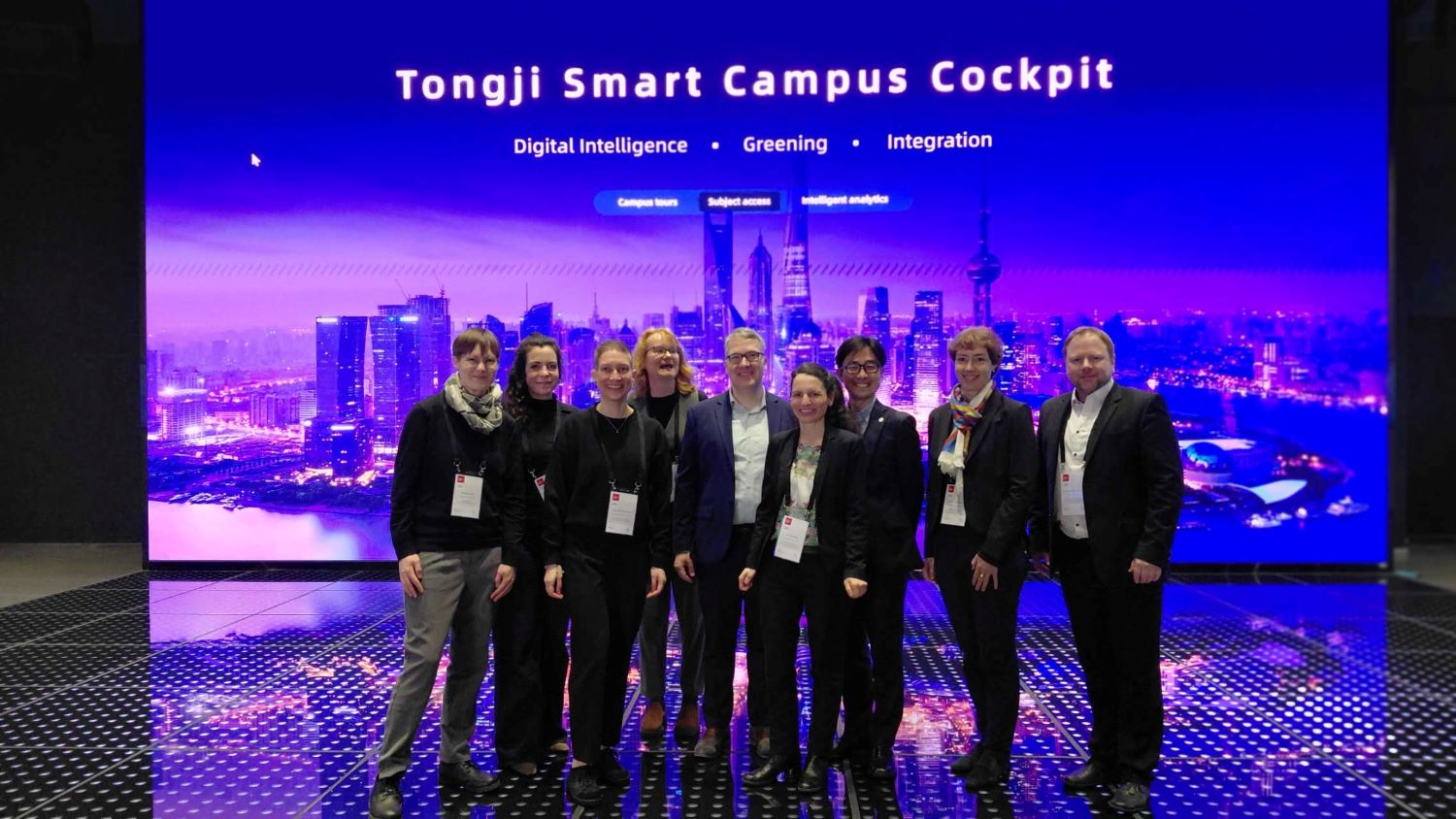
China Delegation at Tongji University
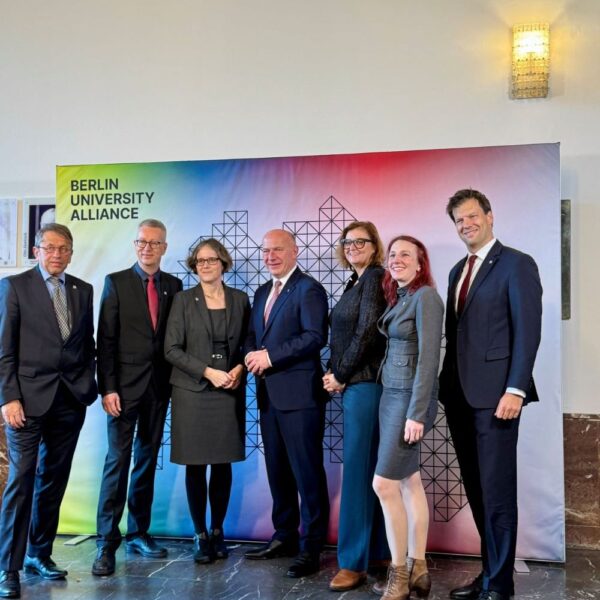
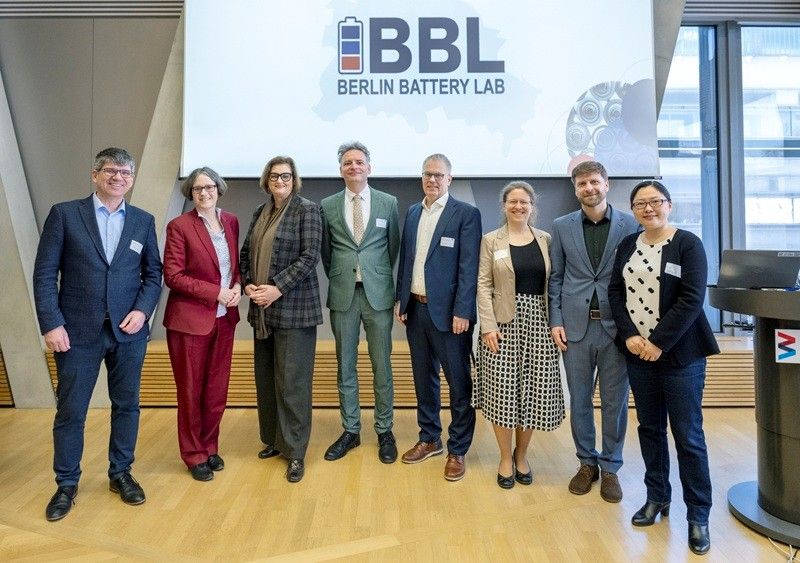
Inauguration of the Berlin Battery Lab with (from left to right) Bernd Rech, Julia von Blumenthal, Ina Maria Czyborra, Philipp Adelhelm, Ulrich Panne, Saskia Vormfelde, Tim-Patrick Fellinger and Yan Lu
Weekly Wrap-up: Highlights in week 12
China Competence Training Center goes China
From March 15 to 25, 2026, a delegation from the China Competence Training Center at Humboldt-Universität zu Berlin including two members of the Humboldt-Innovation Academy as well as specialists and executives from various universities and research institutions traveled to China. Their goal is to expand their China-related expertise and gain firsthand insights into the complex, forward-looking ecosystem of Shanghai and the Yangtze River Delta. During the visit, meetings are scheduled with representatives from science, business, politics, and diplomacy to exchange ideas on China’s higher education and research landscape, innovation strategies, and international cooperation, while also fostering professional networks.
Science & Startups Reopens Applications for the Berlin Startup Scholarship
Aspiring entrepreneurs can now apply once again for the Berlin Startup Scholarship (Berliner Startup-Stipendium) through Science & Startups. In March, the startup network launched its new call for applications titled “Science & Startups for Democratic Resilience.” The program awards scholarships to startups that have developed innovations focused on democratic resilience, social stability, and sustainable development. This year, the total funding volume for the Berlin Startup Scholarship amounts to 31 million euros, enabling the support of 680 prospective founders. The funds are provided by the State of Berlin and the European Social Fund. Click here for the full article: Science & Startups Raises 8 Million Euros for a New Round of Funding in the Berlin Startup Scholarship Program • Berlin University Alliance
Inauguration of the Berlin Battery Lab (BBL)
In mid-March, the Berlin Battery Lab (BBL) was officially inaugurated. In this new facility, the Federal Institute for Materials Research and Testing (BAM), Humboldt-Universität zu Berlin (HU), and the Helmholtz-Zentrum Berlin (HZB) will collaborate to develop and test resource-efficient battery technologies, with a specific focus on sodium-ion batteries. The research facility is also open to external partners from science and industry, such as startups and technology-based companies. The primary goal of the lab is to accelerate the transition from research to practical application while efficiently leveraging the synergies between the participating institutes. All three institutions possess outstanding expertise in this field; HU, for instance, is one of the leading universities in the area of sodium-ion batteries. Consequently, HU Professor Philipp Adelhelm was appointed as one of the lab’s three scientific directors, alongside Dr. Tim-Patrick Fellinger (BAM) and Prof. Dr. Yan Lu (HZB).